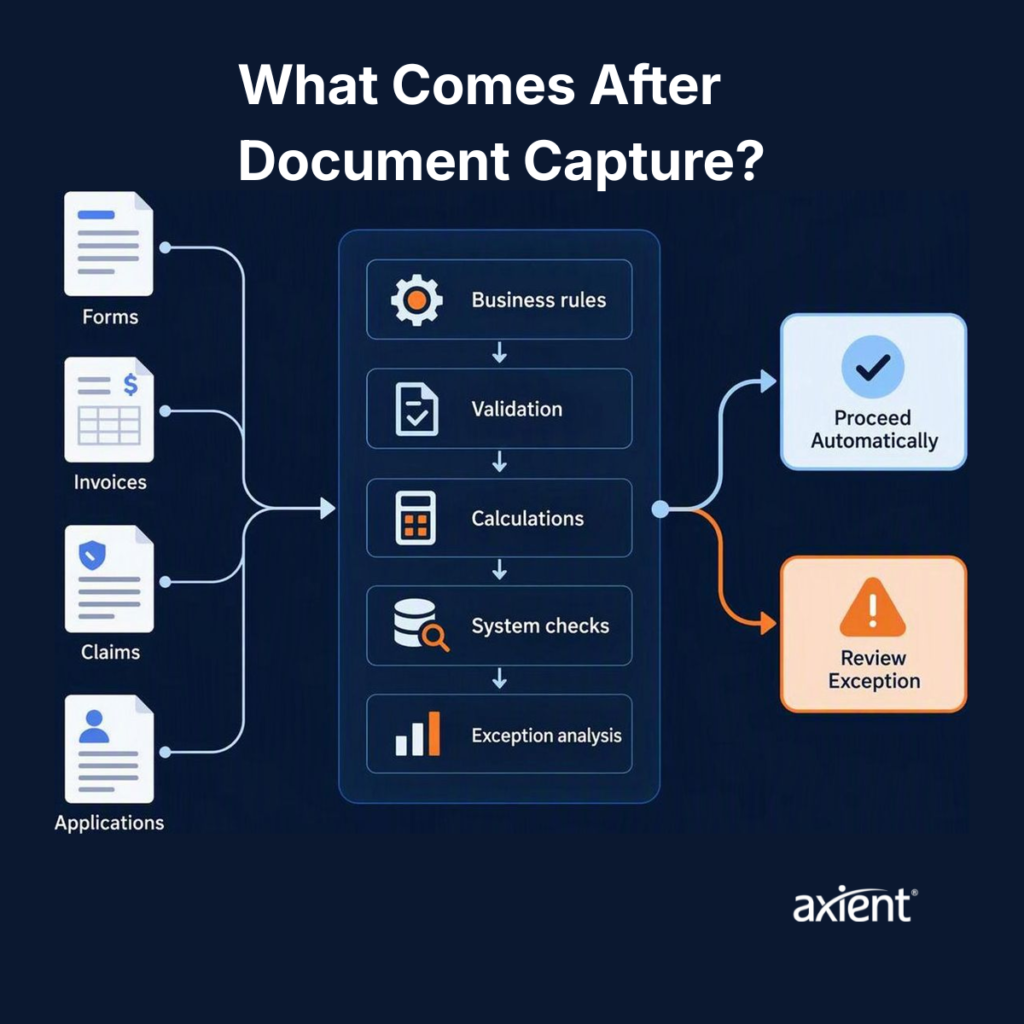
Removing manual data entry is a good start, but it does not automatically improve the whole process. If people still review every transaction after the data has been captured, much of the workload remains. The next opportunity is to identify which transactions can move forward on their own and reserve your team’s time for the exceptions that genuinely need attention.
In our previous blog, we looked at the hidden workloads after a sales order arrives. Someone may still need to open it, read it and enter the same information into another system before fulfilment can begin.
We also looked at the more complex and often costly work involved in validating information and enforcing business rules.
The bigger opportunity is to move people out of routine processing and into exception-based workloads.
What actually needs someone’s attention?
Consider a sales order or an invoice. If the customer is recognised, product codes are valid, quantities and pricing are correct, delivery information is complete and the numbers reconcile, does someone really need to review it?
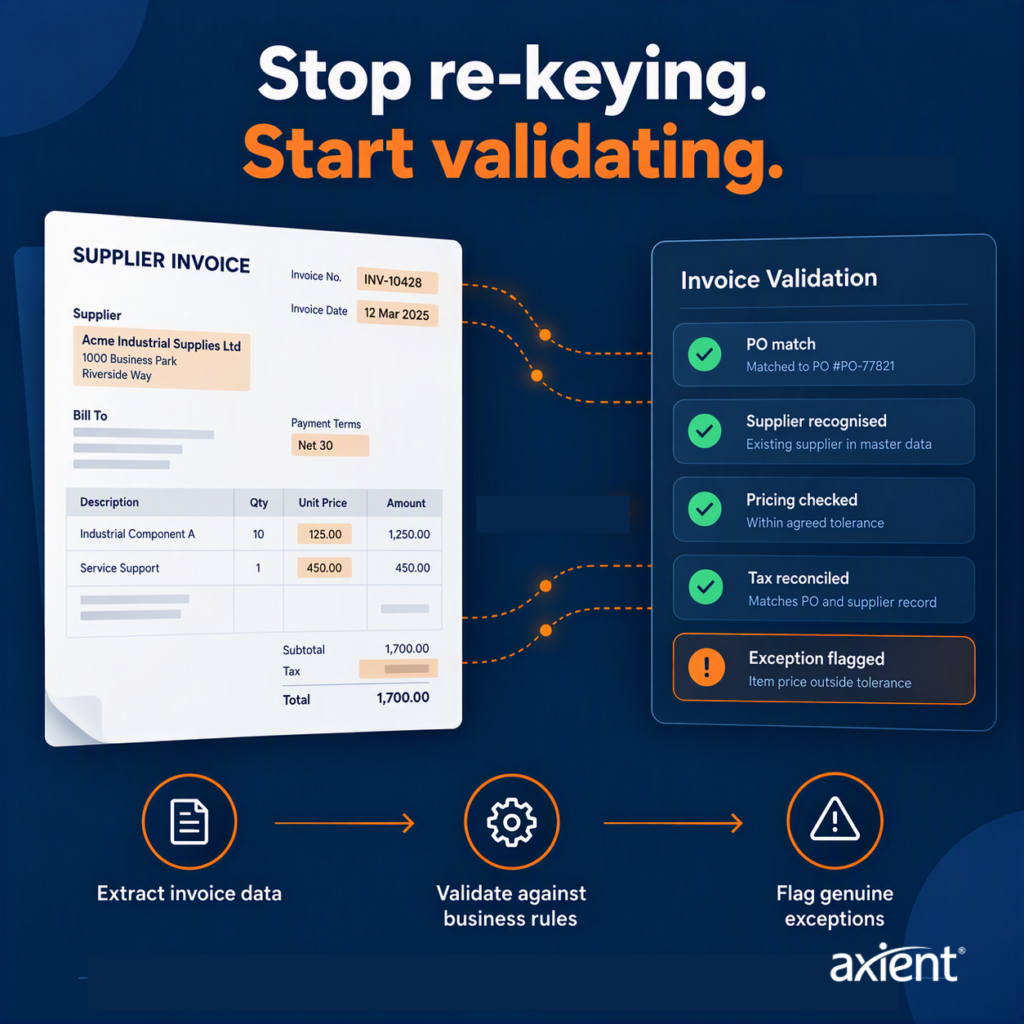
Exception reporting directs the team to the transactions that genuinely need attention. The exception might be a matching problem, such as an unrecognised customer or incorrect product code; a validation problem, such as pricing outside an agreed tolerance; a completeness problem, such as missing delivery information; or a reconciliation problem, where the numbers do not balance. These categories give you a useful starting point for identifying where people are still required in your own process.
These are genuine exceptions. This is the shift from people processing every transaction to people managing the exceptions.
How exception-based processing changes the workload
Intelligent Document Processing can extract information from a document, compare it with trusted system data and test it against defined business rules. When those checks pass, the transaction can continue through the routine path. When a check fails, the transaction can be routed to the right person with the relevant information and the reason it needs attention.
Your team remains part of the process, but its workload changes. People focus on judgement, investigation, customer service and action rather than repetitive handling of routine transactions. That also changes what operations teams can measure: the percentage of transactions moving straight through, the volume and type of exceptions, and how quickly each exception is resolved.
Instead of asking, “How many transactions can each person process?”, ask, “What percentage of our transactions genuinely need a person?”
That creates a more valuable objective: increase straight-through processing for routine work while giving people the information and context required to resolve exceptions quickly.
How to identify exceptions in your document process
Take one high-volume document process and ask:
- Which transactions follow predictable rules?
- What conditions genuinely require human judgement?
- Can those exceptions be clearly defined?
- What percentage could move forward without manual intervention?
- What information would someone need to resolve an exception?
Bring us your document challenge. We can help identify where exception-based processing can reduce routine workloads and improve business outcomes. Let’s explore what that value looks like.