Great work your customer has done their part and placed a sales order with you.
However, before fulfilment can begin, someone in your team may still need to open the order, read it and enter the same information into another system. So, whilst the order arrived electronically the process behind it is still manual.
The hidden work after an order arrives
Customer orders can arrive by email, PDF, spreadsheet or through a portal. The format may be digital, but the information is not always ready for your order fulfilment systems.
A person becomes the processing link between the customer’s sales order and the system used to fulfil the order. We typically see some of the person steps in processing being identify the customer, find the order number, enter product codes and quantities, check delivery details and ensure the numbers add up.
If orders are handled across different teams, sites or systems, that work can quickly become slower and harder to manage.
Manual entry is the process and Problem
Whilst orders get processed and customers receive their deliveries, the questions for operations leaders and executive management are at what cost.
With people dependent processes what happens when order volumes increase, experienced staff are unavailable or your business is seasonal and requires significant administration training.
On a macro scale what if your business is scaling with new product or service lines and sales order processing becomes a bottleneck. Key performance metrics across a business engine room of finance, operations, marketing and sales are often impacted.
Turn the order into information your systems can use
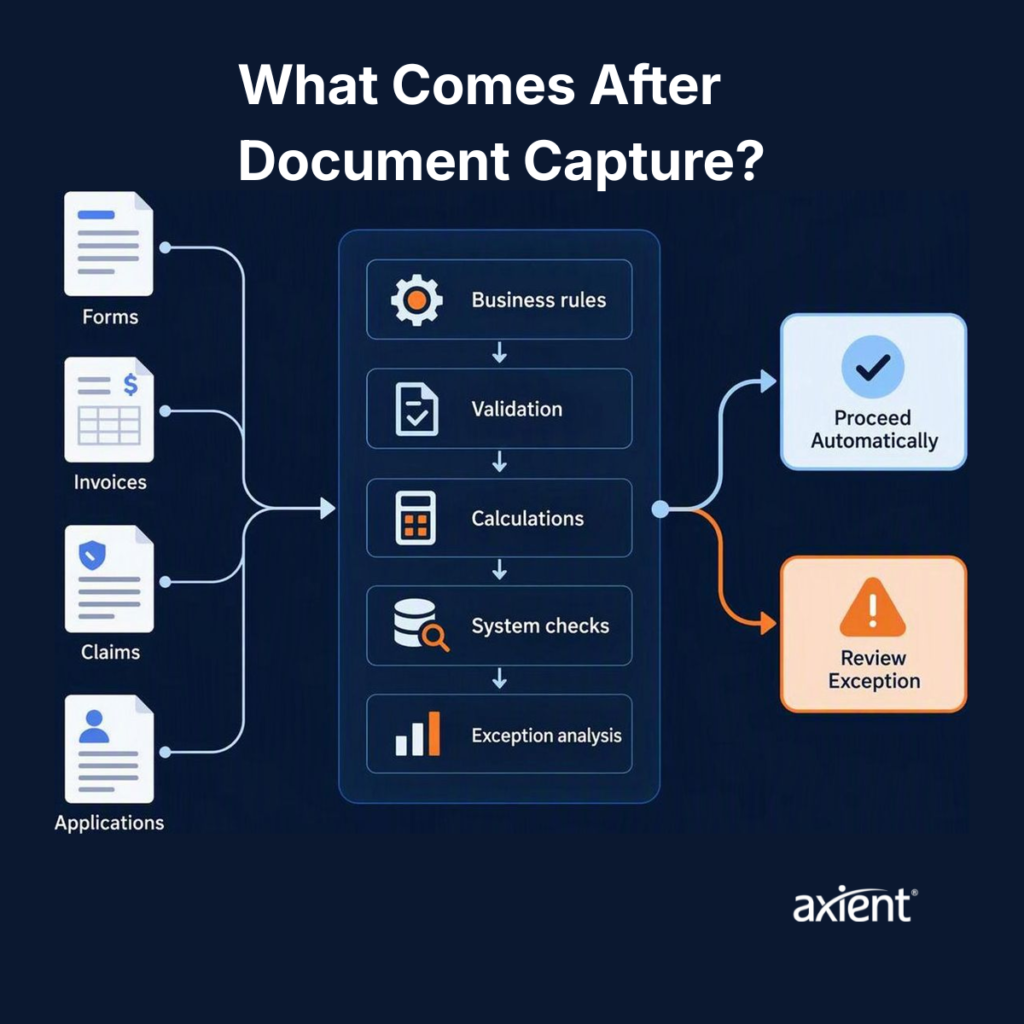
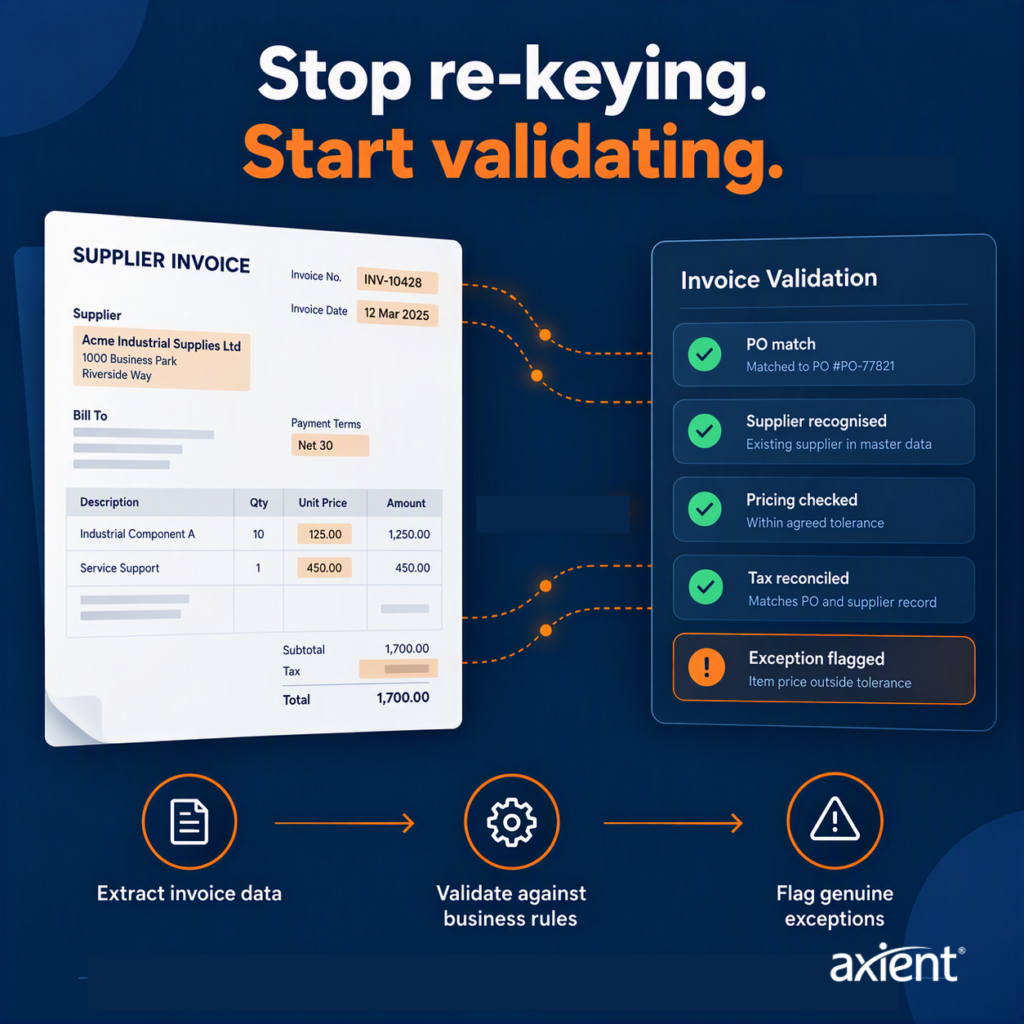
Intelligent Document Processing can help close the gap between people dependant processing and automation. We do this through exception-based processing and the delivery of data directly into your business systems.
In short, we reduce the manual effort involved in reviewing, validating and processing business documents. Automating structured sales order data for downstream systems and workflows unlocks processing bottlenecks.
Look at what happens before fulfilment begins
If your team is still entering customer orders manually, the opportunity sits before you.
Map your sales order process from the moment it arrives to the moment fulfilment begins.
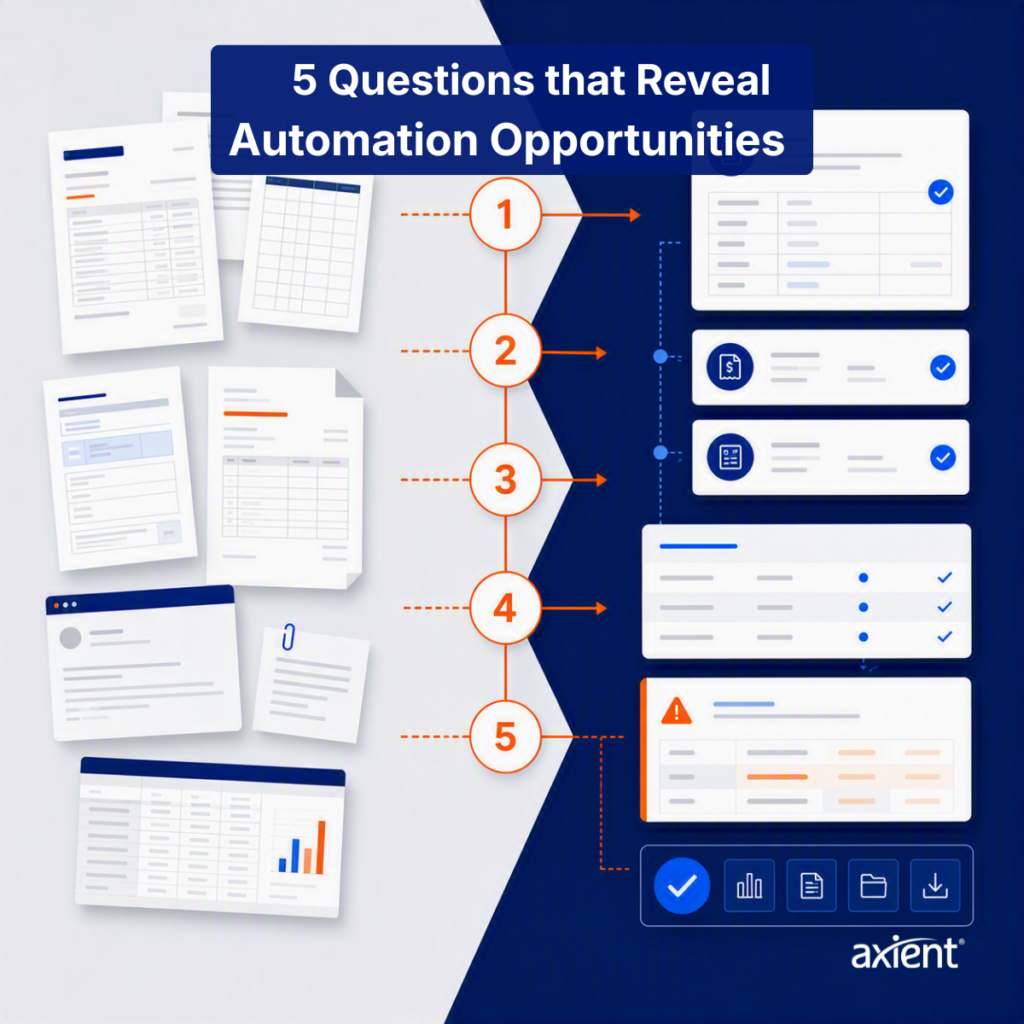
Understand:
- Who opens and reads the order?
- What information do they enter again?
- What checks do they complete before the order can proceed?
- What happens when information is missing or does not match?
- How long does the order wait before it becomes available to the fulfilment team?
Bring us your document challenge.
We can help achieve your business outcomes through exception-based processing for sales order fulfilment.
Let’s explore what that value looks like.
For a broader look at automation opportunities, read Five Questions That Reveal Automation Opportunities.